Buying an Apartment Under Construction: What to Check
Aleksandra J.
Buying an apartment under construction gives you more choice: a modern layout and materials, and the chance to select a floor, orientation or parking space early. Yet you must decide before you can see your finished home.
Attractive renders and a good location are only part of the picture. Before you pay a deposit or sign, find out exactly what you are buying, who is responsible for fulfilling the contract and what happens if the timeline or agreed specifications change.
Use the questions below when speaking with the developer, your lawyer and the family members involved in the decision. The documents and tax obligations depend on the property and the terms of the agreement. Treat independent professional review as part of the purchase process.
1. Know who is selling the apartment
Start by clarifying who you are negotiating with and who will be the contractual seller. Ask for the basic details of the developer or seller, as well as a contact person who can give clear answers about the project.
Useful questions include:
- Who is the developer, and who will be named as the seller in the contract? - Can you view previous completed projects? - Who is responsible for construction, supervision and buyer communication? - How will you be notified if the timeline, materials or layout changes?
Do not settle for a general assurance that everything will be fine. Ask for clear answers and supporting documents that your lawyer can examine. Ohrid lawyer Vlado Aleksijevski advises buyers to check the following before paying:
"Buyers should check who owns the land and whether the developer has the right to build and sell the apartments, using a current property record (imoten list) and documents establishing the legal basis for those rights. They should also check for mortgages, prohibitions, disputes, enforcement proceedings and other encumbrances. If a bank holds a mortgage, the release of the particular apartment should be agreed in writing."
2. Understand the project stage
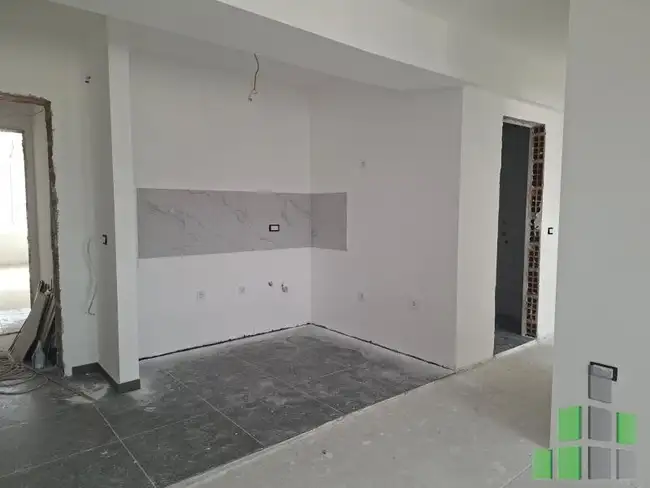
“Under construction” can describe very different situations. One project may be at an early planning stage, another may have visible progress, and a third may be close to handover. That affects what can be checked today and what must be precisely agreed for later.
Ask the seller to explain:
- the current stage of the building and the next important milestone;
- which part of the project the apartment belongs to;
- how the apartment is identified: entrance, floor, unit number, area, terrace, storage or parking;
- which plans and technical specifications form part of the offer, and which are illustrative only.
Checking the Real Estate Cadastre is an important part of the purchase. The law provides for different types of entries concerning property and rights, including buildings under construction. Your lawyer should determine which records and procedures apply to the apartment you intend to buy. On the construction pre-registration record Aleksijevski explains: "This record contains cadastral information about a building under construction and its planned individual units. Buyers should check whether their apartment appears in it; whether its designation, floor, area and associated spaces match the approved plans and preliminary agreement; who holds the recorded rights; and whether any encumbrances or other relevant notes are registered. The construction pre-registration record is not the same as a final property record. On its own, it does not prove that the buyer has become the owner."
3. Review every part of the preliminary agreement or contract
The key question is not only “What is the price?” It is also “What exactly is included in that price, and on what terms?” The preliminary agreement or contract should identify the apartment and both parties’ obligations clearly enough to avoid assumptions later.
Pay particular attention to whether the document matches what you were told about:
- the exact area and how any difference in square metres is handled;
- the price, currency, payment schedule and included items;
- parking, storage, terraces and shared areas;
- the target completion and handover date;
- the rules for changes, delays, termination or return of paid funds;
- the technical specification, including flooring, sanitary fittings, heating, insulation, windows and common areas.
Do not assume that a verbal promise, a sketch shown in a sales office or a Viber message has the same legal weight as the terms in a signed agreement. If a feature matters to your decision, ask for it to be set out clearly in the agreement. On the preliminary agreement, he stresses:
"Buying an apartment under construction carries the risk of paying for a property that has not yet been completed, legally formalised or registered as an individual unit in the Cadastre. Before paying, the buyer therefore needs a legal and technical review and a precise preliminary agreement. The preliminary agreement must also meet the form required by law for that type of transaction."
4. Ask what happens if the timeline changes
Timelines matter even more when your current tenancy is ending, you are selling another property or arranging financing. Ask for the planned date, but also for the process that applies if that date moves.
Get clear answers on:
- which date is the construction-completion target and which is the handover date;
- how and when you will be notified about changes;
- what happens if the layout or agreed specification changes;
- what documents and condition are expected at handover;
- how you can record concerns you notice during the handover.
A realistic timetable is more useful than an optimistic promise. Leave room in your plans, especially if the purchase is linked to a move or the sale of your current home. On delays, the lawyer adds: "Agreeing only on a date for “completion of construction” is not enough. Separate calendar deadlines are recommended for finishing the building work, obtaining the necessary technical and cadastral documents, signing the final agreement and enabling registration of the buyer, and physically handing over the apartment with a written handover record. A finished or occupied apartment alone does not provide adequate protection without a properly arranged legal transfer.
If the developer is late, the agreement can provide for a contractual penalty, retention of a substantial final portion of the price until the conditions for legal formalisation, transfer and proper handover are met, and a right to terminate after a clearly defined additional period. For greater security, the buyer may also consider a bank guarantee for repayment of the advance or another form of security that can realistically be enforced."
5. Budget for the whole purchase, not only the listing price
When comparing two apartments, do not compare price per square metre alone. Make a personal budget covering everything needed to make the home ready to live in.
Include:
- the purchase price and payment schedule;
- parking, storage or other additional units;
- fit-out, furniture, kitchen, lighting and appliances;
- legal advice, notarial and other procedural costs;
- taxes or other charges, confirmed for your specific transaction with a lawyer, notary and relevant municipality;
- a reserve for changes you may make after handover.
Tax treatment and responsibility for individual costs should never be assumed. The Public Revenue Office notes that property transfers and tax obligations have specific rules, so obtain advice that applies to your actual contract.
6. Visit the location more than once
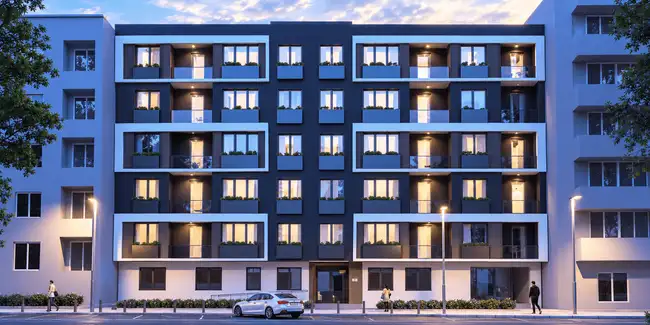
A render shows an idea. A site visit shows everyday life. Visit at different times of day and look at access, traffic, noise, sunlight and the wider area.
Consider:
- whether the apartment orientation matches the plan;
- how access works on foot, by car and by public transport;
- whether nearby services work for your household;
- what is being built or planned on neighbouring parcels, where public information is available;
- whether the proposed parking arrangement suits the way you live.
If you are buying for a family, bring the people who will share the decision. A different perspective often reveals a question you would not have asked alone.
Checklist before you sign
Before you pay a deposit or sign, make sure you can answer “yes” to these questions:
- I know who the seller is and who is responsible under the contract.
- I understand the project stage and exactly what I am buying.
- I have the documents my lawyer needs to review.
- I understand the price, payment schedule and additional costs.
- I know what the agreement says about the timeline, delays, changes and handover.
- The technical specification matches what was presented to me.
- I have visited the location and considered the practical conditions of living there.
Buy with clear questions, not assumptions
Buying an apartment under construction does not have to feel uncertain. When you check the contract, documents, timetable and full budget before paying, it is easier to compare options and understand where the real risk sits.
If you are unsure, take time for independent legal advice. Then explore new-build listings by location, price and the features that genuinely suit your needs.